SEO vs AEO vs GEO: How to Rank on Google AND ChatGPT in 2026
Search just split into two games and most businesses only play one. SEO ranks your links, AEO makes you the answer, GEO gets you recommended by AI assistants.
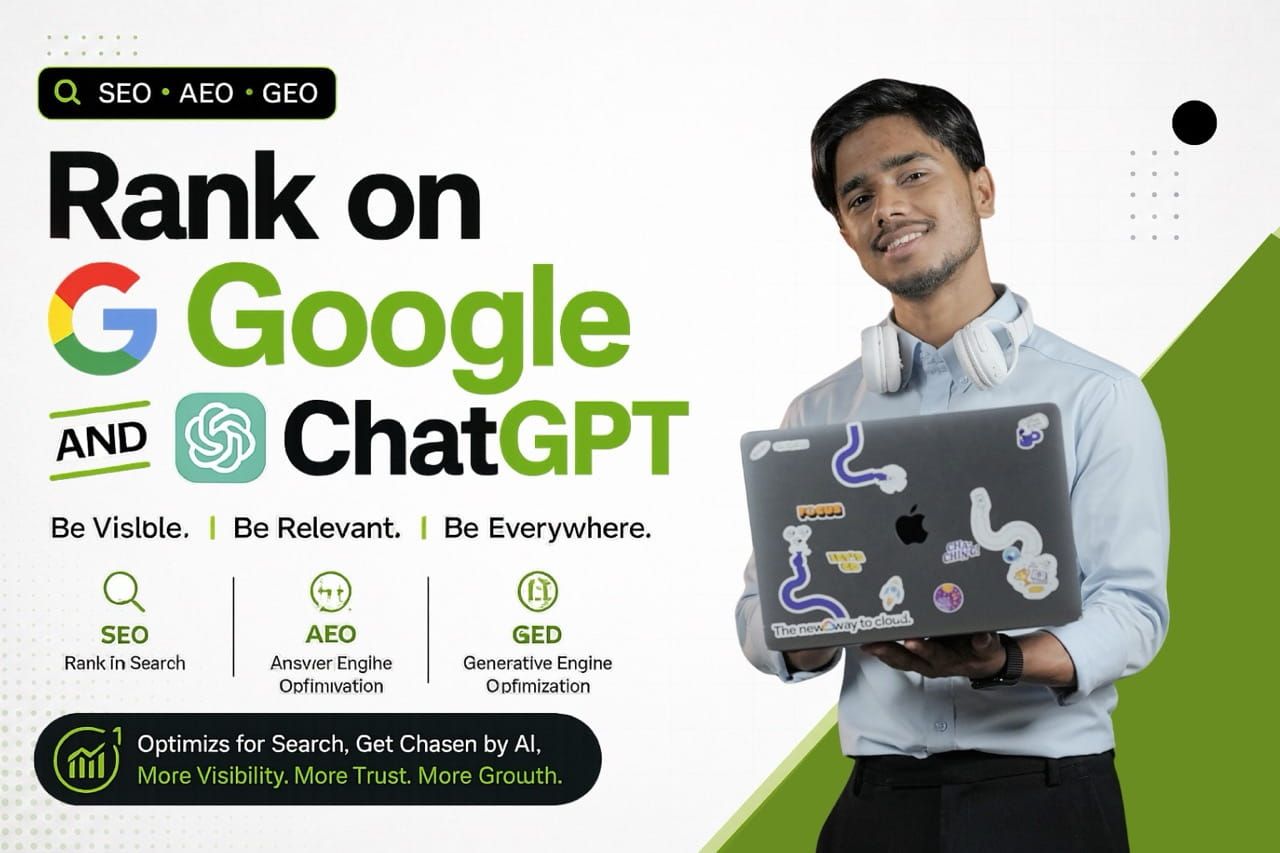
Search just split into two games — most businesses only play one
For twenty years, 'getting found online' meant one thing: ranking on Google. That era is ending. In 2026, a fast-growing share of people no longer search and scroll through links — they ask ChatGPT, Gemini or Perplexity a question and accept the single synthesised answer. Google itself now answers many queries with an AI summary before any link appears. This split has created new disciplines with new acronyms, and the businesses that understand them will quietly win the next decade. Let me make them clear.
SEO: the game you already know
Search Engine Optimisation is about ranking your pages in the traditional list of blue links. It still matters enormously — most searches still happen on Google, and ranking there still drives huge traffic. The fundamentals remain: a technically sound site, dedicated pages targeting real search terms, genuinely useful content, and trust signals like reviews and links. If your SEO foundation is weak, the newer games will not save you. SEO is still the base.
AEO: optimising to be the answer
Answer Engine Optimisation is about being the source that answers a question directly — in Google's AI summaries, in featured snippets, and in voice search. The shift in mindset is important: instead of trying to rank a page, you are trying to be quoted as the answer. That means structuring content around real questions and giving clear, concise, authoritative answers a machine can lift and trust. Content that says 'the average cost is X' in a clean, factual way is far more quotable than vague marketing prose.
GEO: getting recommended by AI assistants
Generative Engine Optimisation is the newest and least understood — it is about getting your brand mentioned and recommended inside the answers that tools like ChatGPT and Perplexity generate. When someone asks an AI 'who is the best digital marketer in Kerala' or 'recommend a resort in Wayanad', GEO is the practice of making sure your name comes up. These systems draw on the wider web, on what others say about you, and on how clearly your expertise is documented online. Being genuinely present, consistent and well-described across the web is the new currency.
Why this matters now, not later
Here is the strategic point: almost none of your competitors are thinking about AEO and GEO yet. That is exactly why it is worth doing now. The same way early SEO gave a lasting edge to businesses that moved before the crowd, AI search optimisation in 2026 is a window that will not stay open. The cost of moving early is small; the cost of waiting until it is obvious is being permanently behind the brands that started today.
How to actually do it: the practical overlap
The encouraging news is that these three disciplines overlap heavily. Content that is genuinely useful, clearly structured, factually confident and consistent across the web serves all three at once. Answer real questions plainly. Use clear headings and direct statements. Keep your facts and figures consistent everywhere your brand appears — AI systems distrust contradictory information, and so do humans. Document your expertise and results clearly. Build genuine presence and mentions across the web. Do these and you are simultaneously improving your SEO, your AEO and your GEO.
What does not change: substance wins
Through every shift, one thing holds. You cannot trick your way into being the answer or the recommendation for long. Both Google's algorithms and AI systems are increasingly good at rewarding genuine expertise and punishing thin, manipulative content. The durable strategy is to actually be good, document it clearly, and stay consistent. The tactics evolve every year; substance is the only thing that compounds.
The bottom line
SEO ranks your links, AEO makes you the answer, and GEO gets you recommended by AI assistants. In 2026 you need all three, and the good news is that useful, clear, consistent, expertise-led content serves them together. The businesses that start now — while competitors still think 'getting found' means only Google — will own the AI-driven search era. That window is open today.
Call to action: Want your brand found in Google AND AI search before competitors catch on? Message wa.me/919048455359 to build your SEO/AEO/GEO strategy.